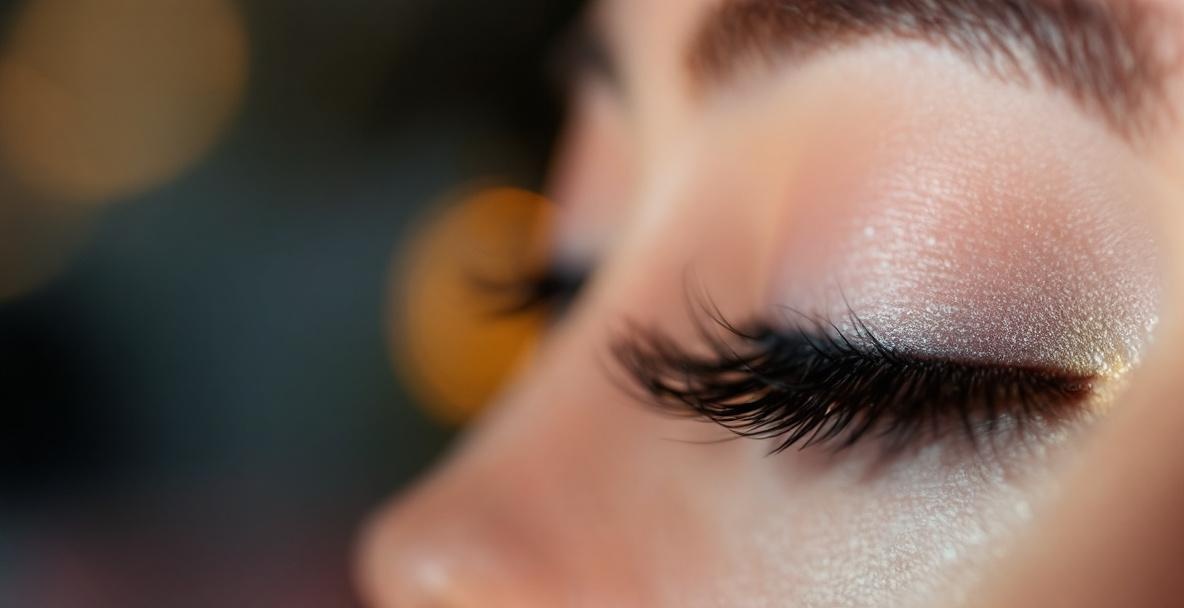
- A lash lift is a chemical curl applied to your natural lashes — no extensions, no glue, no fibers added
- Procedure takes 45–60 minutes (75 with tint), and results last 6–8 weeks
- Cost in DFW: $85 stand-alone, $115 with tint at our Carrollton studio; nationally $75–$150
- Avoid water for 24 hours; oil-based products and steam shorten the lift's life
- The most common reason a lift fails is operator error, not the chemistry — choose a trained, licensed technician
Complete Lash Lift Guide for 2026: Procedure, Cost, Aftercare & FAQ
A lash lift is a semi-permanent chemical curl applied to your natural eyelashes. It uses a keratin-based perm solution to reshape each lash upward from the root, opening the eye and making lashes look longer — without adding any fibers, glue, or extensions. The procedure takes 45–60 minutes, results last 6–8 weeks, and at our Carrollton, TX studio it costs $85 (or $115 with a tint).
This is the long-form guide. If you came looking for a single answer, jump to the relevant spoke article below — but if you're trying to understand the whole picture before booking (or before becoming a technician yourself), read straight through. I'll cover the chemistry, the procedure, the costs, the aftercare, and the things technicians don't always tell you up front.
I'm Liz Martin, a Texas-licensed cosmetologist and certified lash instructor. I've been doing lash services since 2017 and running Liz Martin Academy in Carrollton, TX since 2020. We've trained 200+ lash technicians and I still see lifts on real clients every week, so the content here reflects what we actually see in the studio — not the marketing version.
What's in this guide
- What is a lash lift
- How it works (chemistry)
- The lift process step by step
- How long it lasts
- What it costs in 2026
- Lift vs lash extensions
- Aftercare essentials
- Wearing mascara with a lift
- Korean lash lift
- Lifting while pregnant
- Curling lifted lashes
- Who should not get one
- Choosing a technician
- Common mistakes
- FAQ
What is a lash lift?
A lash lift is a chemical procedure that breaks and re-forms the disulfide bonds in your natural lash hair, locking them into an upward curl. Think of it as a perm — but designed for lashes, with much gentler formulations than the salon hair perms of the 1980s.
The treatment uses three main solutions applied in sequence: a lifting solution (typically containing thioglycolic acid or its salts) to break the bonds, a setting solution (typically containing hydrogen peroxide or sodium bromate) to reform them in the new curled shape, and a nourishing serum (often keratin or oil-based) to recondition the processed hair.
The result is your own lashes — same length, same density — repositioned to point upward instead of straight ahead or down. For people whose lashes naturally grow in a way that makes the eye look smaller (straight, downward-pointing, or "Asian-monolid" lash growth), the difference is dramatic. For people who already have curly natural lashes, the difference is subtle. For more on this, see our spoke article on what a lash lift is.
How a lash lift works (the chemistry)
Hair — including lash hair — is mostly a protein called keratin. Keratin strands are held together by sulfur–sulfur bonds called disulfide bonds. These bonds are what give your hair its natural shape. Curl your lashes with a heated tool and you're temporarily forcing them into a new shape; the disulfide bonds spring them back as soon as they cool.
A lash lift breaks those bonds chemically. Step one is the lifting solution: a mild reducing agent (thioglycolate-based) penetrates the lash hair and cleaves the sulfur–sulfur links. With the bonds broken, the lash is plastic — it'll hold whatever shape you bend it into. The technician has already curled each lash up over a silicone rod or shield, so the lash is now sitting in its new lifted shape with no internal bonds holding it.
Step two is the setting solution: an oxidizing agent (peroxide or bromate) re-forms the disulfide bonds in their new positions, locking the curl in place. Step three is the nourishing serum, which restores some of the moisture and lipids the chemical process strips away.
That's the whole science. The two things that go wrong are over-processing (leaving the lifting solution on too long, which damages the lash) and under-adhering (the lash slips off the silicone rod, so the bond reforms in a kinked shape). Both are operator errors, not problems with the chemistry itself.
The lash lift process, step by step
A typical lash lift appointment runs 45–60 minutes. Here's the actual sequence — see our timing breakdown for more detail on each step.
1. Consultation and prep (5–10 minutes)
The technician examines your natural lashes — length, density, growth direction — and discusses the curl level you want. They clean your lashes thoroughly with a non-oil cleanser to remove makeup, oils, or residue. Anything left on the lash blocks the chemical from penetrating evenly.
2. Choosing and placing the silicone rod (10–15 minutes)
Silicone rods come in graduated sizes (S, M, M1, M2, L, XL). Smaller rods produce a tighter curl; larger rods produce a softer lift. The choice depends on your lash length and the look you want. The rod is glued to your eyelid with a safe lash adhesive so it sits along the lash line.
3. Adhering each lash to the rod (10–15 minutes)
This is the slowest and most precise part. Using a small amount of adhesive and a fine tool, the technician brushes each individual lash up over the silicone rod, isolating it so it doesn't stick to its neighbors and doesn't cross. Skipped or crossed lashes result in uneven lifts.
4. Lifting solution (8–12 minutes)
The lifting solution is applied along the upper third or half of the lash (never on the root, which is sensitive skin). Processing time depends on lash texture — fine lashes need less time, coarse lashes need more. The technician times this carefully; over-processing causes brittleness.
5. Setting solution (8–12 minutes)
The setting solution is applied for roughly the same amount of time. It locks the curl in place. Rushing this step is the #1 reason for lifts that "drop" or relax too quickly.
6. Optional tint (5–10 minutes)
Many clients add a tint to darken light or blonde lashes. The tint is a separate step using a dye + developer system, and it adds 5–15 minutes to the appointment. See our spoke article on lash lift + tint.
7. Nourishing serum (2–3 minutes)
A keratin or oil-based serum is brushed through the now-curled lashes to restore moisture. The rod is gently removed, the lashes are combed, and you're done.
How long does a lash lift last?
A lash lift lasts 6–8 weeks. The curl doesn't suddenly disappear — it gradually fades as new uncurled lashes grow in. Most clients notice the curl starting to soften around weeks 5–6 and re-book at week 6–7.
Three things shorten that window: oil-based skincare, steam exposure, and rubbing the eyes. Oil dissolves the chemical bonds; steam relaxes them; mechanical rubbing physically straightens lashes faster than they'd relax on their own. Our duration spoke goes deeper on the variables.
Worth knowing: the duration also depends on your natural lash growth cycle, which varies person to person. Clients with faster lash growth see lifts fade faster simply because they're getting more new uncurled lashes in the same time window. We don't have a way to slow down lash growth, so this is just a physiological variable.
Lash lift cost in 2026
National pricing for a lash lift in 2026 is $75–$150. In Texas — including the Dallas–Fort Worth metroplex — the typical range is $75–$120. Adding a tint costs an extra $20–$30. Our cost breakdown covers regional variation in detail.
At our Carrollton studio, a stand-alone lash lift is $85 and a lash lift + tint is $115. We're priced in the mid-range on purpose: lower than that and we'd be cutting on product quality (which isn't worth it near the eyes), higher than that is a metro-area / brand-premium charge that doesn't reflect the actual labor.
If you're seeing prices below $50, ask what product line the technician uses. The reputable brands (Elleebana, Lash Bomb, NovaLash, Kashmara) cost $30–$60 per kit at wholesale, and a single client treatment uses ~$8–$12 of product. A $40 retail price either means a low-quality product line, an unlicensed technician, or someone burning out their kit too fast to deliver a careful service.
Lash lift vs lash extensions: which should you choose?
Both treatments enhance lashes; they do completely different things. A lash lift reshapes your existing lashes. Lash extensions glue artificial fibers onto your existing lashes for length and volume. Most clients should pick based on what they're after.
| Feature | Lash Lift | Lash Extensions |
|---|---|---|
| What it does | Curls your natural lashes upward | Adds artificial length and volume |
| Procedure time | 45–60 min | 90–150 min initial, 60–90 min fills |
| Cost (initial) | $75–$150 | $150–$300+ |
| Maintenance | None — just aftercare | Fills every 2–3 weeks ($60–$120 each) |
| Total duration | 6–8 weeks | Ongoing as long as you keep up fills |
| Look | Natural, enhanced curl | Length and density |
| Best for | Low maintenance, natural look | Drama, special events, very sparse lashes |
| Daily care | Avoid oil-based products | No oil-based products, no rubbing, special cleanser, careful sleeping |
| If you stop | Curl gradually fades, lashes unchanged | Fibers fall out, but natural lashes underneath are intact |
One non-obvious tradeoff: extensions look most dramatic the day they're applied; lifts look better at day 2–3 once any residual product is washed off and the lashes "fluff." If you're getting it done for an event, time the appointment accordingly.
Lash lift aftercare essentials
Aftercare in the first 24 hours determines whether your lift lasts 4 weeks or 8. Most premature drops we see in re-bookings come from skipping the first-day rules. Our aftercare spoke goes step-by-step; here's the short version.
First 24 hours: no water on the lashes, no steam, no rubbing. The setting bonds are still cross-linking; water disrupts them mid-form.
First 48 hours: no saunas, hot showers (steam-tight), or vigorous workouts that produce a lot of facial sweat near the eye. Sleep on your back if possible — crushing the curl against a pillow on the first night creates a permanent flat spot on one side.
Ongoing (whole 6–8 weeks):
- Skip oil-based cleansers, makeup removers, and serums anywhere near the eye area
- Use water-soluble mascara if you wear any (more on that below)
- Brush lashes upward with a clean spoolie each morning — this resets the curl pattern
- If you swim regularly, rinse lashes in fresh water afterward — don't let chlorine sit on them
Wearing mascara with a lash lift
Yes, you can wear mascara with a lash lift — after the first 24–48 hours. The trick is the formula. Avoid waterproof mascara: it requires oil-based remover, which dissolves the chemical bonds holding your lift. Stick to water-soluble (also called "tubing" or "regular") mascara that washes off with warm water and a gentle cleanser.
Most of our regulars find they wear less mascara after the lift than before. The lift handles the curl — mascara is just for darkness. A single coat is usually enough. Read our full mascara spoke for product picks.
Korean lash lift: how it differs
A "Korean lash lift" is a stylistic variant rather than a different technique. Instead of curling lashes into a strong C-curve, it lifts them straight up from the root for a more elongated, straight-up look — popular for monolid eye shapes where a strong curl can look unbalanced.
Mechanically it uses smaller silicone rods (or sometimes flat shields) and a lighter touch on the lifting time. The chemistry is identical. Our Korean lash lift spoke covers when to choose this style and what to ask for at consultation.
Lash lift while pregnant or breastfeeding
This is the question we get asked most carefully, and the honest answer is: it's a personal decision to make with your doctor, not a blanket yes or no.
The chemicals in a lash lift stay on the lashes — they're not absorbed through skin in any meaningful quantity. There's no published evidence of harm from professionally administered lash lifts during pregnancy. But pregnancy hormones can also change the response — clients sometimes report lifts taking less or processing differently when pregnant, which we don't have hard data on but see in our chair.
Most professional lash technicians (us included) will defer to the first trimester rule — no elective treatments during the first 12 weeks unless the client and her doctor have explicitly cleared it. After the first trimester, we'll do the service if you and your doctor are comfortable. Our pregnancy spoke covers this in more detail.
Should you curl your lashes after a lift?
You shouldn't need to. The whole point of the lift is that your lashes are already curled. Using a manual eyelash curler on lifted lashes is one of the most common ways clients accidentally wreck their lift — the squeeze creates a sharp crimp at the root that reads as "broken" rather than curled, and that crimp doesn't relax.
If your curl looks flat in the morning, the right tool is a clean spoolie used in upward strokes — not a curler. If you absolutely need to refresh the curl for an event, a heated lash curler is gentler than a manual one (and you should still wait at least 48 hours after the lift). Full guidance is here.
Who should not get a lash lift
Lash lifts are wrong for some people, full stop. We turn clients away — sometimes politely, sometimes firmly — under these conditions:
- Active eye infections (conjunctivitis, blepharitis, recent stye). Wait until cleared by a physician.
- Recent eye surgery within the past 6 months — including LASIK, cataract surgery, blepharoplasty.
- Trichotillomania or active lash-pulling. The lift will only highlight the gaps.
- Allergies to thioglycolate or peroxide. A patch test is non-negotiable if there's any history of reaction.
- Lashes shorter than ~4 mm. There isn't enough length to create a visible curl — clients leave disappointed.
- Active retinoid or chemical peel use on the surrounding skin. Wait 1–2 weeks after stopping.
- Recently dyed lashes (within 24 hours). Let the dye settle.
If your technician doesn't ask any of these questions during consultation, that's a red flag. A consultation that takes under 60 seconds is a consultation you didn't get.
How to choose a qualified lash technician
Lash lift quality varies wildly between technicians. Here's what to check before you book.
1. License
In Texas, lash services are typically performed by licensed cosmetologists or estheticians, regulated by the Texas Department of Licensing and Regulation (TDLR). License status is publicly searchable. If a technician can't show or doesn't mention their license, walk away.
2. Specific lash lift training
A cosmetology license alone doesn't mean someone has been trained on lash lifts — it's a specialty. Ask what brand they were trained on (Elleebana, Lash Bomb, NovaLash, Kashmara, etc.) and how long ago. Newer technicians should be open about it; experienced ones will name a specific product line.
3. Studio cleanliness
The studio should look like a healthcare-adjacent space, not a bedroom. New disposable tools per client, sealed product bottles, hand washing station, no pets in the treatment area.
4. Portfolio
Ask for before-and-after photos of clients with lash patterns similar to yours. A portfolio of cookie-cutter dramatic curls on long lashes doesn't tell you whether they can handle short or hooded eye-shape clients.
5. Consultation depth
A real consultation takes 5+ minutes and asks about: pregnancy, eye surgery, allergies, current skincare actives, contact lens wear, and what curl level you want. Skip this and you're not consulting; you're rubber-stamping.
6. Pricing
Mid-range. Too cheap = low product quality or rushed service. Too expensive = brand premium that doesn't always translate to better technique. The honest middle of your local market is usually right.
Common lash lift mistakes (yours and the technician's)
Most failed lifts have one of a small number of root causes. Knowing them helps you spot problems early.
The lift dropped after a week
Almost always under-processing of the setting solution, or oil-based products applied too soon. If the technician hit the timing right and you followed aftercare, this shouldn't happen — bring the issue back to them rather than rebooking elsewhere.
Lashes look "fishhooked" at the tips
The lash tip slipped off the silicone rod during processing, so the chemical set the lash in a kinked position. Application error. Sometimes correctable on the spot before the setting step; not correctable after.
Lashes feel brittle after the lift
The lifting solution was on too long. The lash is over-processed — internal bonds permanently weakened. Use a lash serum with peptides or castor oil and let the cycle complete; the lashes will renew, but the existing damaged ones won't reverse.
Uneven curl across the eye
The technician didn't isolate each lash before adhering — some lashes were stuck together or crossed, and the curl set unevenly. Application error. Visible the day of, not in week 3.
One eye looks lifted, the other doesn't
Either the rods were different sizes (rare) or the technician's processing time was uneven across the two eyes (more common, especially in rushed appointments). Worth flagging to the technician — most will redo the under-lifted eye if you mention it within 48 hours.
Book a lash lift in Carrollton, TX
Stand-alone lift $85 · with tint $115 · 45–60 minute appointment · in English & Spanish.
Book Your AppointmentWant to learn how to do this yourself?
Our 1-day Lash Lift & Brow Lamination certification course covers everything in this guide — chemistry, troubleshooting, and live-model practice. $1,099 with kit and certificate.
View the TrainingFrequently asked questions
Is a lash lift safe?
When performed by a licensed and trained technician with current product lines, a lash lift is generally safe. The chemicals are applied to lashes only, not skin, and processing time is closely monitored. Risks rise sharply with untrained DIY attempts or rushed appointments — most adverse events come from over-processing, not from the technique itself.
How much does a lash lift cost in Texas?
In the Dallas–Fort Worth metroplex, a lash lift typically costs $75–$120, with $85 being the most common price for a stand-alone lift. Adding a tint usually costs an extra $20–$30. Prices significantly below this range often indicate inexperience or low-quality product lines.
How long does a lash lift last?
A lash lift typically lasts 6–8 weeks, with the curl gradually relaxing as new lashes grow in. Oil-based skincare, frequent steam exposure, and rubbing the eyes shorten that window. Most clients re-book at the 6-week mark.
Can you wear mascara with a lash lift?
Yes, after the first 24–48 hours. Stick to water-soluble mascaras — waterproof formulas need oil-based removers, which dissolve the lift. Many clients find they need much less mascara than before, since the lift handles the curl.
Can you get a lash lift while pregnant?
It's a personal decision to make with your doctor. The chemicals stay on the lashes (not absorbed through skin in meaningful amounts), but most technicians prefer to wait until after the first trimester to avoid the lying-flat-on-back position and any unnecessary chemical exposure during the most sensitive period of pregnancy.
What's the difference between a lash lift and lash extensions?
A lash lift curls your own natural lashes using a chemical process — no fibers added. Extensions glue artificial fibers to your natural lashes for length and volume. A lift is lower-maintenance (no fills) but won't add length. Extensions add drama but require fills every 2–3 weeks.
Can you cry, swim, or shower after a lash lift?
Avoid water on the lashes for the first 24 hours so the bonds can finish setting. After that, normal showering is fine — just avoid steam, saunas, and oil-based products around the eyes for the first 48 hours. Pool chlorine isn't great for any lash treatment, but it won't ruin a properly set lift.
Why did my lash lift go straight or kink at the tips?
A "fishhook" or sharp angle at the tips usually means the lashes weren't fully adhered to the silicone rod during processing — the tip slipped, and the chemical set the lash in a kinked position. This is an application error, not a product issue. A trained technician can sometimes correct this on the spot before the setting solution is applied.
Where to go next
Each section above links to a deeper article on the spoke topic. Direct links: