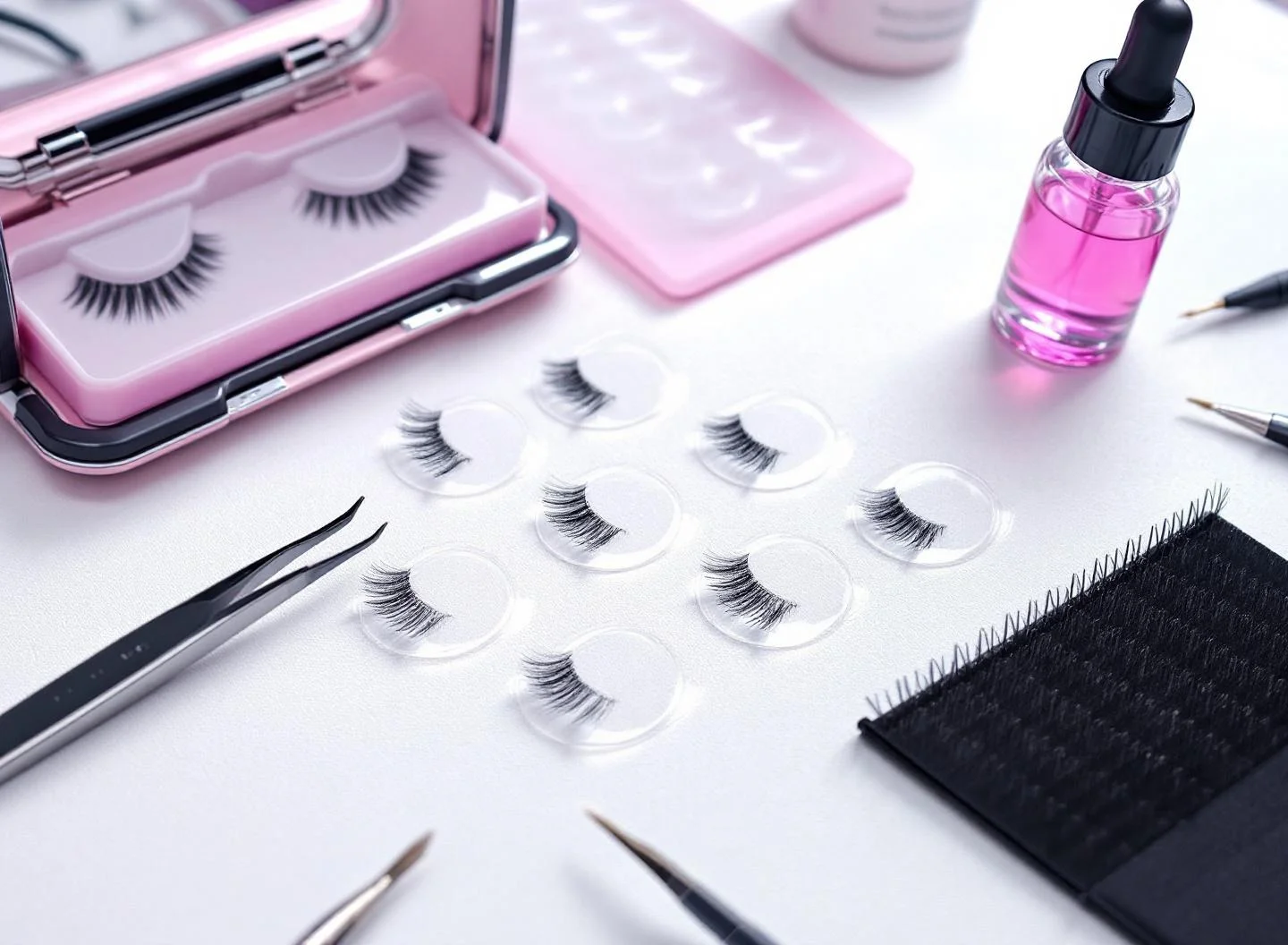
- Texas requires a TDLR license to legally do lash work — Eyelash Specialist (320h), Esthetician (750h), or Cosmetology (1,000h)
- Total time to working tech: 3–18 months depending on the licensing path you choose
- Total cost (license + specialty training + starter kit): roughly $4,000–$15,000
- Solo lash techs in Texas typically earn $40k–$90k/year; top DFW performers clear six figures
- Specialize first, expand second — most thriving lash businesses started with one service done well
How to Become a Lash Tech in Texas: Complete 2026 Guide
To become a lash technician in Texas in 2026, you need a current cosmetology, esthetician, or eyelash specialist license from the Texas Department of Licensing and Regulation (TDLR), plus specialty certification in the services you plan to offer (lash lift, brow lamination, classic and/or volume lash extensions). The fastest path — Eyelash Specialist license — takes about 3–6 months and costs $4,000–$6,000 in total. Realistic income once you're working: $40k–$90k per year as a solo or salon-suite tech, with top performers in DFW clearing six figures.
This guide walks the whole path. I'll cover the licensing options Texas offers, what each one costs and how long it takes, what to look for in a school, the specialty certifications that actually matter, the equipment you'll need, how to price your services, and what realistic income looks like in the first 3 years.
I'm Liz Martin — Texas-licensed cosmetologist and founder of Liz Martin Academy in Carrollton, TX. I've trained 200+ lash technicians since opening in 2020, and a lot of this guide is what I wish someone had told me before I went through the process myself.
What's in this guide
Why lash technician as a career
Three things make lash work attractive as a career: the income ceiling is real, the entry barrier is genuinely low compared to other licensed beauty work, and you can run the business yourself without owning a salon. A solo lash tech with a full book in DFW, Austin, or Houston earns more than many entry-level corporate jobs and works flexible hours.
The honest downsides: the work is detail-heavy and sedentary, you spend a lot of time staring through a magnifier, your eyes and back will tell you about your posture, and the first 6–12 months building a clientele are slow. Most people who quit do so in year one — not because they hate the work, but because they didn't budget for the slow ramp.
Texas license options
Texas regulates beauty services through TDLR. To legally perform lash services on paying clients, you need one of three licenses. As of 2026:
| License | Hours required | Scope | Tuition (typical) |
|---|---|---|---|
| Eyelash Extension Specialist | 320 hours | Lashes & brows only | $3,500–$6,000 |
| Esthetician | 750 hours | Lashes, brows, facials, waxing, peels | $8,000–$12,000 |
| Cosmetology Operator | 1,000 hours | Hair + skin + nails + lashes | $12,000–$18,000 |
All three require passing a TDLR-administered written and practical exam. Application fee: $50. Exam fee: $59 (written) + practical exam fee where applicable.
Always check current requirements directly on the TDLR cosmetology FAQ page, since hour counts and fees can change.
Which path makes sense for you
Eyelash Extension Specialist (320 hours)
Best for someone who knows lashes are their lane. Fastest, cheapest, narrowest scope. You can legally do lash extensions, lash lift, lash tinting, and brow services — but you can't do facials, peels, or waxing. If a client asks for a brow wax, you'd refer her out. For a lash-only business, that's fine.
Esthetician (750 hours)
Best if you might want to add skincare services later. Roughly twice the time and cost of the Eyelash Specialist, but a much wider service menu. Most working lash techs we know who run beauty lounges (rather than lash-only studios) hold an esthetician license.
Cosmetology Operator (1,000 hours)
Best if you want hair too, or you're not yet sure of your specialty. Significantly more expensive and time-consuming, but the most flexible license. A cosmetologist can legally do everything an esthetician can, plus haircuts, color, and chemical services. Overkill if you only want lashes.
One under-the-radar consideration: in some salon environments, a cosmetology license carries more credibility with managers than the Eyelash Specialist license, even though both are technically sufficient. If you plan to work as an employee in a high-end salon, that may matter.
How to pick a TDLR-approved school
Texas has dozens of TDLR-approved schools. Quality varies. What to check:
- TDLR approval status: verify the school is on the current TDLR-approved list. Searchable on the TDLR website.
- Pass rate on first attempt: ask. A reputable school will tell you. Sub-70% means students aren't being prepared.
- Hands-on hours per student: the headline hour count includes lectures, but what you actually need is hours with a tweezer in your hand. Ask for the breakdown.
- Class size: 1:5 instructor-to-student ratio or better is workable; 1:15 means you'll spend most of your time waiting for feedback.
- Equipment age: walk through. Old, off-brand product lines are a red flag.
- Bilingual instruction: if Spanish is your stronger language, ask for actual Spanish-language instruction, not just translated handouts.
- Job placement support: some schools have hiring partnerships with local salons. Most don't. Don't pay extra for "career services" that turn out to be a one-page job-hunting handout.
Tuition deposits are usually non-refundable, so visit before you commit. A 30-minute studio tour tells you more than a Google review thread.
The TDLR exam
Once you've completed the required hours, you sit the TDLR exam — written + practical components. Written tests cover sanitation, infection control, anatomy of the eye area, chemistry of lash products, and Texas-specific salon law. Practical tests demonstrate technique on a mannequin or model.
Most candidates pass on the first attempt if they actually attended class. The two most common failure points: (1) Texas-specific law questions, which schools sometimes under-cover; (2) sanitation procedures, where shortcuts you took in school will surface. Study the actual TDLR exam content outline, not just school-supplied review materials.
Once you pass, your license arrives in 1–4 weeks. You can't legally accept paying clients until it's in your hand.
Specialty certifications you actually need
The TDLR license alone doesn't make you a lash tech. It makes you legally allowed to do lash work. The skill comes from specialty certifications on top.
Lash Lift & Brow Lamination certification
The fastest specialty to add. Most courses are 1–2 days and cost $700–$1,500 with a starter kit. We run our Lash Lift & Brow Lamination certification as a 1-day intensive — $1,099 with kit and certificate. Lash lift + brow lamination is the most-asked-for combo in DFW right now and a sensible first specialty for anyone newly licensed.
Classic Lash Extension certification
The bread-and-butter of most lash businesses. Multi-day course (typically 3–5 days). Tuition runs $1,200–$2,500 with kit. Our Classic Lash Extensions course is a 3-day intensive at $1,599 with kit and live-model practice. Mastering classic before moving to volume is non-negotiable — if you can't isolate cleanly with classic, volume just multiplies the problem.
Volume Lash Extension certification
The high-ticket service. Volume technique uses multiple ultra-fine lashes hand-fanned to a single natural lash. Higher skill ceiling, higher prices ($249–$400 per full set in DFW). Most people take this 6–12 months after working classic full-time. Tuition: $1,500–$3,000.
Lash Artistry / Hybrid / Mega Volume
Specializations on top of the above. Optional. Worth taking once you have a steady book and want to expand pricing.
Our take: don't try to learn everything in your first six months. Get one specialty solid, build a real book of clients, then add the next one when you have spare bandwidth. Most techs who burn out tried to be a one-stop shop on day one.
Starter equipment and kit
The minimum to take your first paying client:
- Lash bed — $200–$800 new, $80–$300 used. A salon-grade bed with a face-rest cutout makes long appointments survivable.
- Lighting — a clamp-on magnifying lamp ($60–$200) is non-negotiable. Without it, you'll squint, hunch, and damage your eyes within months.
- Stool with back support — $80–$250. The cheap saddle stools without back support will give you back pain in a year.
- Tweezers — $30–$80 each, you need at least an isolation pair (straight) and an L-curve (or volume-fan) pair.
- Adhesive — $30–$80 per bottle, lasts 1–3 months once opened. Get an adhesive matched to your studio's humidity.
- Lashes — $50–$150 to start a basic inventory. C and D curl, lengths 8–14mm, 0.10–0.15mm thickness for classic.
- Primer, gel pads, surgical tape, brushes, micro-applicators — $50–$100 for a starting set.
- Sanitation: hospital-grade disinfectant (Barbicide or equivalent), disposable wands, glove supply, sharps container.
Total starter kit budget: $500–$1,500 if you build it yourself; $300–$800 if you buy a pre-assembled kit through your training school. The pre-assembled route is usually cheaper but locks you into one product line. We include a kit with our courses precisely because it removes that decision while you're learning.
Where you'll work
Salon employee
Pros: built-in clientele, shared marketing, no capital risk. Cons: 40–60% commission to the house, less control over schedule and pricing. Income: $25k–$55k typical.
Booth rental / salon suite
Pros: keep 100% of revenue, set your own hours, build a personal brand. Cons: monthly rent ($300–$1,200 in DFW), you handle your own marketing and supplies. Income: $40k–$90k typical, $100k+ achievable in year 3+.
Home studio
Pros: no rent, lowest overhead. Cons: HOA/lease restrictions, TDLR salon shop license still required, harder to look professional to high-end clients. Texas requires home studios to have a separate, dedicated treatment room — not your living room with a bed wheeled in. Realistic income: $30k–$60k as a side income; can scale to $80k+ if you do this full-time.
Mobile
Texas does allow mobile lash services with proper licensing, but it's a logistical headache (carrying gear, doing services in client homes with variable lighting and sanitation). Most mobile techs we know do it as a transition strategy, not a long-term plan.
Pricing your services
The single biggest mistake new lash techs make is undercharging. The thinking goes: "I'm new, I should be cheap." The reality: clients who shop on price don't become loyal regulars, and you'll burn out filling a calendar of $40 lifts.
Realistic 2026 DFW pricing for a newly certified solo tech:
| Service | New tech | Year 2+ tech | Senior tech |
|---|---|---|---|
| Lash Lift | $65–$80 | $85–$100 | $100–$130 |
| Lash Lift + Tint | $85–$110 | $110–$135 | $130–$170 |
| Brow Lamination | $55–$75 | $75–$95 | $95–$125 |
| Classic Lash Full Set | $120–$160 | $160–$200 | $200–$260 |
| Classic Lash Fill | $50–$70 | $70–$90 | $85–$115 |
| Volume Full Set | $180–$230 | $230–$300 | $300–$400 |
If you're newly licensed, start at the low end of "new tech" pricing and raise it 10–20% every 6 months as your book fills. Loyal clients who came in at the intro price will stay through reasonable raises.
Realistic income in your first 3 years
Year 1: ramp
You'll spend the first 3–6 months mostly empty. Even with marketing, building a book takes time. Expect $20k–$40k gross in year 1 working solo, less if you're part-time or building from scratch. This is normal. Budget for it.
Year 2: stabilize
If your work is good and you've kept showing up on social, your book starts filling. $45k–$75k is realistic. Most techs raise prices once during this year.
Year 3+: profitability
Full books, steady waitlist, established Google/social presence. $70k–$120k+ for solo techs in DFW. Top performers with a volume-extension specialty and rented salon suite clear $150k+. You can also start adding services (brow lamination, body contouring, etc.) to diversify revenue.
Solo lash techs are 1099 contractors or LLCs — no employer deducting taxes. Set aside 25–30% of every payment for federal/self-employment taxes.
Surviving your first year
The first year separates careers from quits. Things that help:
- Save 6 months of expenses before you start. The slow ramp will eat through savings if you didn't build a runway.
- Practice on free models for the first 2–3 weeks. Even after certification, your first 50 clients are still part of the learning curve. Do them at cost (or free) and use the time to build a portfolio.
- Post consistently on Instagram and TikTok. Lashes are a visual service. Before/after photos drive 60–80% of new bookings. Post 4–7 times a week minimum.
- Set up a Google Business Profile. Most local searches start there. Free and high-leverage.
- Don't over-discount. Discount your time, not your skill. Loyalty rewards (every 5th fill is half off) work; race-to-the-bottom Groupon promos don't.
- Get business insurance. $200–$500/year. One client allergic reaction can cost more than a decade of premiums.
- Track every client. Software like Vagaro, GlossGenius, or even a spreadsheet — you need to know who books, who rebooks, and who churns.
Common mistakes new lash techs make
- Skipping the patch test on new clients. One adhesive reaction and you have an injured client and a TDLR complaint.
- Buying cheap adhesive. $15 adhesive on Amazon costs you in retention complaints. Spend the $50.
- Working through fatigue. A tired tech makes mistakes. If you can't see clearly, stop.
- Not raising prices. Holding intro pricing for 3 years means working twice as hard for the same income.
- Trying every new lash trend. Master one technique before chasing the next viral style.
- Ignoring posture. Your body is your career. Hunching over a lash bed without proper setup ends careers in 5–10 years.
- Skipping continuing education. Lash chemistry and tools change. A tech who hasn't taken a course since they were licensed in 2020 is using 2020 techniques.
A note on bilingual technicians in Texas
Spanish-speaking lash techs in DFW, Houston, and Austin have a real advantage. The Spanish-speaking professional community is large, underserved by quality bilingual training, and willing to pay for service in their primary language. We teach in both English and Spanish at our academy because the demand is real, and bilingual graduates fill their books faster than monolingual ones in most DFW neighborhoods.
If you're a Spanish speaker considering this career, lean into it — both in your training (find a school that teaches in Spanish, not just translates handouts) and in your marketing. "Servicios en español" in your Google profile pulls a clientele that single-language techs can't reach.
Ready to start your lash career in Texas?
Our hands-on certification courses are taught in English and Spanish in Carrollton, TX — class size capped at 4, kit and certificate included.
View Training ProgramsFrequently asked questions
Do you need a license to be a lash tech in Texas?
Yes. To legally apply lash extensions, perform lash lifts, or do brow lamination on paying clients in Texas, you must hold a current cosmetology, esthetician, or eyelash specialist license issued by the Texas Department of Licensing and Regulation (TDLR). Operating without one is illegal and can result in fines and inability to obtain insurance.
How long does it take to become a lash tech in Texas?
If you take the dedicated Eyelash Specialist license route through TDLR, you need 320 hours of approved training plus the state exam — most students finish in 3–6 months. If you go the esthetician route (750 hours) or cosmetology route (1,000 hours), it takes 9–18 months. After licensing, specialty certification courses (lash lift, brow lamination, classic extensions) add 1–5 days each.
How much does it cost to become a lash tech in Texas?
Total cost ranges roughly $4,000–$15,000 depending on the path. Eyelash Specialist license route: ~$3,500–$6,000 in tuition + $50 application fee + $59 exam fee. Esthetician school: ~$8,000–$12,000. Cosmetology school: ~$12,000–$18,000. After licensing, specialty courses add another $700–$2,000, and a starter kit for taking clients runs $300–$800.
What's the difference between an Eyelash Specialist and an Esthetician license?
An Eyelash Specialist license (320 hours) only authorizes lash and brow services — extensions, lifts, tints, lamination. An Esthetician license (750 hours) covers a broader scope including facials, chemical peels, and waxing. If lashes are your only goal, the Eyelash Specialist license is faster and cheaper. If you want to add facials or skincare to your service menu, go esthetician.
How much do lash technicians make in Texas?
Solo or salon-suite lash techs in Texas typically gross $40,000–$90,000 a year, depending on hours, pricing, and clientele. Top performers in DFW, Austin, or Houston with full books and a volume-extension specialty can clear six figures. Salon employees on commission usually earn $25,000–$55,000 — less because the salon takes a 40–60% cut.
Can I work from home as a lash tech in Texas?
Yes, but with caveats. You need (a) a separate, dedicated treatment space (not your kitchen or living room), (b) sanitation that meets TDLR salon standards, and (c) a salon shop license for the location. Some HOAs and lease agreements prohibit operating a business from home, so check those before investing in build-out.
What equipment do I need to start as a lash tech?
Minimum: a lash bed, adjustable lighting (preferably a magnifying lamp), tweezers (isolation + L-curve), adhesive, lashes in 2–3 curl/length variations, primer, gel pads, surgical tape, and a sanitation setup. Starter kit cost: $300–$800. For lash lift specifically, add a brand-system kit ($60–$120) with rods, lifting/setting solutions, and serum.
Should I get certified in multiple services or specialize?
Most successful lash techs start with one service done well, then expand. Lash lift + brow lamination is the most common starter combo because they share clients and work well together. Add classic extensions once your lift book is full, then volume extensions. Trying to learn everything at once usually means learning each thing badly.
Related reading
- Complete Lash Lift Guide for 2026 — the lash lift technique in depth
- About Liz Martin — your instructor's background and credentials
- All training programs at Liz Martin Academy
- Lash Lift & Brow Lamination Course ($1,099)
- Classic Lash Extensions Course ($1,599)
- TDLR Cosmetology FAQ — official Texas licensing reference